
Introduction
This manual aims to educate users about safety practices and emergency protocols in practice around the IISc Campus. While it covers many hazards, it cannot account for every possible situation. Users must exercise discretion and common sense at all times.
1.1.1 Define Standards
Safe may mean different things to different people. To prevent confusion, IISc insists on established standards. The responsibility for defining safety protocols rests with the lab’s Principal Investigator (PI).
Hazards should be clearly labeled so others can easily understand them, e.g., use warning notes and labels. Practices must be documented, not just communicated verbally.
The standards must comply with the IISc Safety Policy. All lab users in IISc must read and follow the IISc Safety Policy. The Safety Policy lays down the rights and responsibilities of each actor – student, staff, faculty, Department, and OLSEH. The standards must also comply with this Safety Manual.
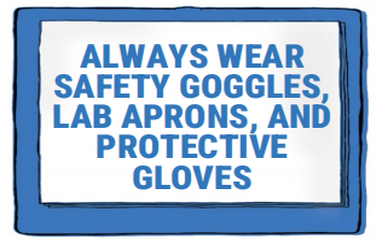 Fig 1.1 Safety signage to be displayed in the lab
1.1.2 Personal Responsibility
The ultimate responsibility for following the protocols rests with the experimenter. Supervisors cannot oversee the operations all the time. Users must be self-disciplined to follow the rules in letter and spirit, even if they appear burdensome or pointless. Be safe, not quick or easy.
Each individual must take responsibility in the event of an incident, for example, by triggering alarms to alert others or reporting unsafe conditions promptly. Hazardous behavior by any individual can jeopardise the safety of others. Safety is your responsibility.
The Institute works with every conceivable hazard. The government allows us to operate with considerable autonomy, trusting us to maintain the highest levels of safety. We must preserve this trust.
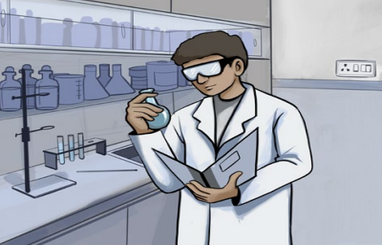 Fig 1.2 User referring to a chemical's MSDS
1.1.3 Structure, not Skill
No matter how careful, people make mistakes. An effective safety policy does not rely on people or skill but on systems to reduce the probability of accidents. Before beginning any project or process, think about all potential hazards – all the things that can go wrong. Focus on reducing the likelihood of accidents by intelligent precautions. Seek solutions that are “error-tolerant”. “I will be careful with chemicals” is not an “idiot-proof” precaution; chemical-resistant gloves are.
Learn how to store, handle, and dispose of hazardous materials. Experiments should be conducted in designated areas with proper ventilation and appropriate safety accessories. Equipment should be well maintained with periodic inspections.
The ultimate responsibility for funding and maintaining safety systems rests with the PI of the lab.
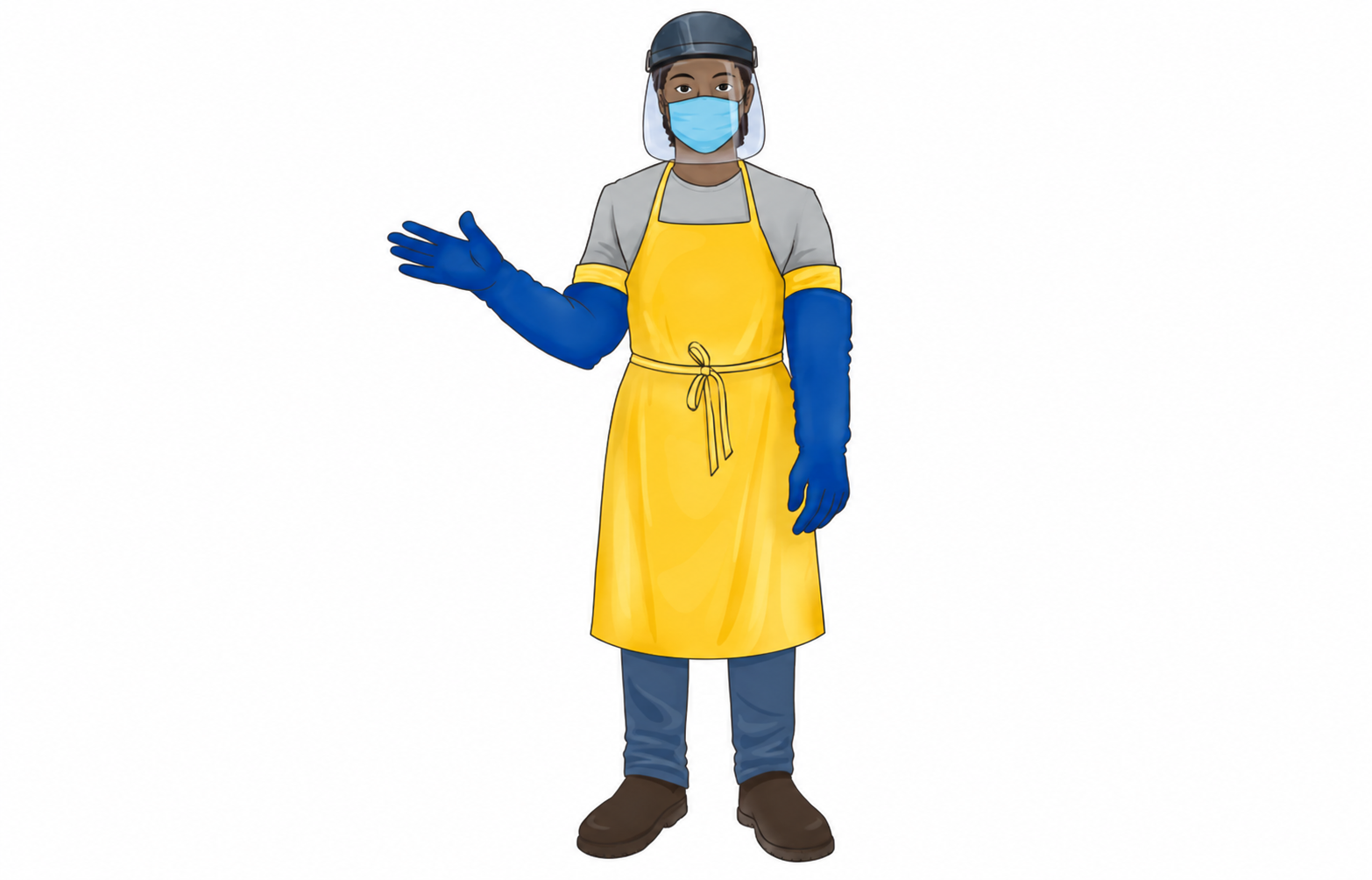 Fig 1.3 Proper use of PPE
1.1.4 Respond to Emergencies
Be prepared to respond quickly and effectively in an emergency. Be familiar with the work area, emergency protocol, e.g., location of emergency exits, eyewash stations, fire extinguishers, sinks, spill kits, and first-aid boxes. Just a few moments spent on training could save a life during an emergency. The ultimate responsibility for establishing training protocols, documenting them, and ensuring student participation rests with the PI of the lab.
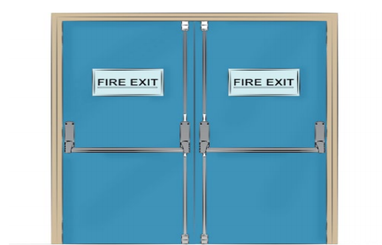 Fig 1.4 Emergency exit door
1.2 Office of Laboratory Safety and Environmental Health (OLSEH)
Office of Laboratory Safety and Environmental Health (OLSEH) polices safety in all labs at IISc. The OLSEH office has a team of experienced and trained EHS officers available to consult on safety issues. OLSEH has a repository of best practices. If you are unsure, contact them at safety.olseh@iisc.ac.in. All communication with OLSEH is confidential and shared only on a need-to-know basis.
Finally, OLSEH is the executive arm of the IISc Safety Committee. The OLSEH office has the right to conduct spot audits, seek information, regulate, and, in extreme cases, recommend disciplinary action. Please respond to any request from the OLSEH office.
New Chemical Science Building,
Indian Institute of Science,
Bengaluru - 560012
T: 0 080-2293 5555
E: safety.olseh@iisc.ac.in
W: olseh.iisc.ac.in
1.3 The Safety Network
All departments and centres have a designated Department Safety Champion. The updated list of Safety Champions is on the OLSEH website https://olseh.iisc.ac.in/safety-network/ safety-champions/
The Safety Champion is the primary contact point for any department-level safety-related concern. They are also looped in if the PI does not address lab-specific issues.
The Safety Committee is the apex body on all laboratory safety matters. If the OLSEH or Safety Champion cannot resolve your issue, please contact the Safety Committee at safetycommittee@iisc.ac.in
If all fails, you can escalate issues to the Registrar, Deans, or the Director.
Safety is a collective responsibility. By following the principles in this manual and working together, we can sustain a strong culture of safety that safeguards the entire IISc community.