
High-Pressure & Gas Safety
Pressurised gases and liquids can cause serious injury and damage. High pressure means any fluid that is at a pressure of two bar or higher.
This chapter also covers safety of hazardous gases, which can be Flammable, Toxic and Explosive.
General Rules
- Portable gas cylinders must always be stored vertically, unless specified otherwise by the OEM. This applies to the full life cycle of a cylinder, including transport, storage, use, and disposal.
- Portable gas cylinders must be harnessed to a solid anchor as per OSHA 29 CFR 1910.253 & 1910.101, or ISO 11625. Cylinder necks can break on impact, which can launch the cylinder like a torpedo, causing massive damage to structures and people.
- Cylinders > 36 inches high must be harnessed at 1/3rd and 2/3rd height. Smaller cylinders must be chained at ½ height.
- The harnesses (chain or belts) must be strong enough to withstand a cylinder impact.
- The anchor must be bolted to a solid building structure, like a wall or floor. Purpose-designed professional racks are acceptable. Carts should only be used for transport or temporary use. They cannot be used for permanent use.
- “Daisy chaining” (looping a chain around multiple cylinders) is forbidden. Each must be individually secured or in a properly designed rack.
- All cylinders must always be clearly labelled. This applies to the full life cycle of a cylinder, including transport, storage, use, and disposal.
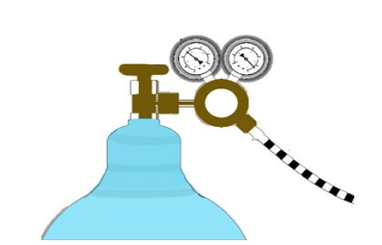 Fig 9.1 Regulator and valve guard
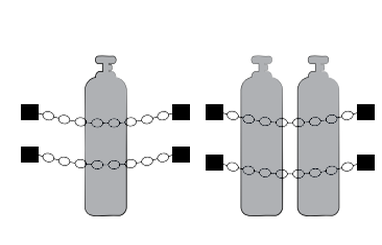 Fig 9.2 Securing cylinders using chains
- Flammable and oxidising gases must be segregated with atleast 20 feet or 6 meters away from each other.
- The cylinder must be located away from other hazards. Maintain an exclusion zone around a cylinder as per the standard given below.
- The cylinders come with a valve guard. This protects the cylinder valve in case the cylinder falls. Please keep it on if the cylinder is not being used.
- Always install the cylinder with an output pressure gauge and shut off the valve. The former ensures that unsafe pressure is not maintained in the line. The latter is useful in an emergency where the gas supply needs to be turned off.
Cylinder Transport
- Cylinders are often poorly handled during transport and delivery. It is the responsibility of the labs to ensure vendors follow the good practices. If they don’t respond, please switch to more responsible vendors. Security will report any unsafe behaviour to OLSEH.
- The cylinders must be stored vertically in the delivery trucks, not lying horizontally on the bed.
- All cylinders must be tightly restrained to anchors as per OSHA 29 CFR 1910.253 & 1910.101, or ISO 11625.
- Incompatible gases must be segregated in the delivery truck, e.g. flammable and oxidising gases.
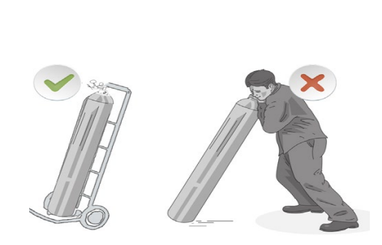 Fig 9.3 Don't roll the cylinders
- A well-designed cylinder cart is the only safe method to move cylinders in corridors and between labs. The cylinders must be strapped to the cart. Never “roll” the cylinders.
Cylinder Installation and Uninstallation
- Most accidents involving gas cylinders happen during installations and uninstallation. Be very careful and alert.
- Cylinders must be changed by a team of two. Double-checking reduces mistakes.
- Write down a standard operating procedure (SOP) for cylinder (un)installation with a step-by-step checklist. SOP should be vetted by some authority
- Carry a hard copy of the SOP while changing cylinders. Checklists and SOPs are a very good way to make sure you don’t forget critical steps.
- Cylinders must be installed far from other hazards like electrical boxes, windows, drains, and doors. Minimum distances from these are given in Figure 9.4
- The label on the cylinder must log the date of installation, cylinder number, the contents of the gas, and the contact information of the responsible user
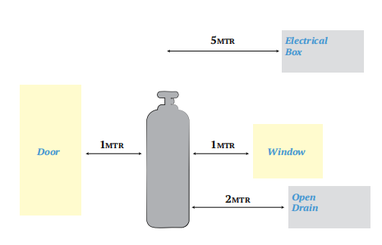 Fig 9.4 Cylinders must be installed far from other hazards like electrical
boxes, windows, drains, and doors.
Hazardous Gases
- IISc follows NFPA 704 nomenclature to define “hazardous”. Any gas with an NFPA rating > 2 in any category is considered hazardous.
- The higher rating implies that the gas is more dangerous than inert compressed gases due to chemical activity, flammability, explosivity, toxicity, or pyrophoricity. Hazardous gases need additional safeguards.
- Some examples of hazardous gases are hydrogen, silane, germane, arsine, diborane, phosphine, metal-alkyls, etc.
Reduce Quantity
- Hazards scale with pressure and quantity. Large
cylinders at high pressure can carry up to 10 m3
of
gas. Evaluate if a smaller cylinder with lower pressure will suffice for your experiment. Details will be
specific, but as an example, consider the following
options for hydrogen.
- Replace 100% hydrogen with 5% hydrogen diluted in nitrogen (called forming gas). Below 5%, H2 is intrinsically safe, even at high pressures. So, there is no need for additional safeguards beyond those prescribed for compressed nitrogen. This is the most cost-effective and straightforward solution.
- Consider purchasing low-pressure cylinders. For example, H2 gets more dangerous when stored amount exceeds 1% of the laboratory volume at standard pressure. A 40 m3 lab remains safe from ignition hazard, even in the case of a catastrophic release, if it stores less than 400 litres of H2 . That translates to a 40-litre cylinder at 10 bar.
- Tabletop H2 generators are an easy solution for small quantities of H2 . They are intrinsically safe and don’t require any special precautions. Prices start at two lakhs. For the pressurised Parr reactions (in the room with autoclaves), consider generators that produce higher pressures, e.g., https://thalesnano.com/phoenix-h-genie-platform/
Safeguard
High-pressure H2 (>4 bar) must be used with proper safeguards. A system must have at least one barrier to prevent a top event and one barrier to mitigate the effect of a top event. Safeguards must also be added to avoid the degradation of a critical barrier. A safety bowtie is a helpful way to visualise this. On the left are preventive barriers, and on the right are mitigation barriers. The analysis is usually the result of a formal HAZID/HAZOP study. OLSEH can help organize these studies for complex systems.
Mandatory Barriers for >4 Bar
The following basic safety systems are needed for all hazardous gases at pressure (including low-pressure cylinders recommended above)
- Basic cylinder safety: The Usual requirements for
any compressed gas cylinder must be followed,
e.g., restraints, labels, etc.
- As a corollary, cylinders should be transported safely in carts. No rolling.
- Get cylinders from reputed vendors.
- Regulators. To step down the pressure for distribution. The output pressure should not be > 8 bar. The use of hazardous gases at higher pressures requires advanced safety features.
- Flash arrestors: If a flammable gas is being used in an open circuit (at some point, gas vents to air without scrubbing), then inlet lines must have flash arrestors. If flash arrestors are not possible, for example, due to purity requirements, the lines must be closed in a loop with a scrubber at the end.
- Outlet valves and fittings: All distribution lines should have a high-pressure diaphragm or ball valve made of metal (chemically compatible with the gas). Avoid using low-cost valves from a hardware store. All fittings, tubes, and valves must be made of metal—no insulating materials like plastic/rubber that can cause static.
- Earthing: Flammable hydrides are highly susceptible to static electricity. All flammable cylinders and lines must be earthed. If the lines use insulating gaskets, such as rubber, then individual sections of the metal line must also be grounded.
- Access-control. Cylinder change is a critical maneuver. Mistakes can be deadly. Only authorised and trained personnel are allowed to change cylinders. The labs must have some form of access control (e.g., lock, room) to prevent unauthorized changes to cylinders
- Log register. A log register must be maintained
with the following information.
- Date of installation with cylinder number; initial quantity of gas in std. litres; cylinder pressure.
- For every usage, there should be an entry with date, starting cylinder pressure, and volume used in std. litres; final cylinder pressure; & username.
- Date of removal of the cylinder; final pressure.
- At a minimum, the gas manifolds must have a purge cross. The purge is used to evacuate residual air during cylinder changeover. Extremely hazardous gases, such as SiH4 , will require more complex manifolds with 5 or 7 valves, which are discussed in the next section.
- Consider passive flow restrictors that limit flow to a low value, like 1 litre/min. These can be simple orifices with an appropriate diameter.
- Sensors: All hazardous gases require interlocked sensors. These must be continually active sensors, mounted near the cylinder and usage point. The sensor’s output should be connected to a siren and a building fire alarm system. In the event the sensor detects a leak, the departments must evacuate. Handheld sensors can be used to detect manual leaks during delivery and after transportation.
Additional Barriers for > 8 Bar or NFPA > 3
In cases where pressure is very high (> 8 bar) or if the NFPA rating in any category is 4, additional safety features are required (in addition to those mentioned above). Details may vary, but we must follow the attached checklist. The department is welcome to submit a plan to OLSEH for consideration. The design of all gas distribution systems of such a system must be certified by two faculty members (with suitable expertise), other than the PI, OR approved by OLSEH
- Gas-cabinets or gas-banks: High-pressure hazardous cylinders should be stored outdoors in a well-ventilated area whenever possible. The gas can be distributed from the gas bank to the labs using SS pipes. Design the gas-bank well. Gases like H2 tend to accumulate near the roof. The electrical fitting near the cylinders of flammable gas must be explosion-rated. Alternatively, the cylinder should be installed by a professional gas-cabinet installer. The gas cabinets may be either completely automatic or semi-automatic, shutting off the gas flow from the cylinder in the event of alarms or gas leaks.
- Cylinder manifold: All high-pressure hazardous gas cylinders must be connected to a 5-valve or 7-valve purge manifold, rated for the gas. Professionally constructed manifolds are commercially available. Don’t design your own. Manifolds are often built into professional gas cabinets.
- Certification for the cylinder. H2 causes embrittlement of metal. Any H2 cylinder must be certified by a reputable manufacturer for storage of H2 . This often means regular isostatic testing. In cases where the certificates are not available, the cylinder must be discarded every 5 years of use.
- Non-arcing tools: For flammable gases, use non-arcing tools for cylinder change or line repair.
- Gas distribution system: Gas distribution on the manifold must be constructed using fittings rated for H2 . We strongly prefer welded, face-seal fittings (VCR® or equivalent). High-quality Swagelok® or other compression fittings with metal ferrules are also okay, if installed professionally. No plastic tubing. All lines must be He-leak checked after installation or repair.
- Active fire-fighting equipment: To contain a fire, flammable cylinders must have active fire-fighting systems, e.g., sprinklers. A sprinkler in the vicinity of an H2 cylinder is mandatory.
- Documentation:
- A clearly written SOP for common events like cylinder changes and transportation. OLSEH must approve the SOP. A template is available on request.
- A list of users who have been trained to change cylinders with dates of their training.
- Depending on the capacity, autoclaves or other high-pressure equipment themselves might require safety paraphernalia like reinforced walls.
Storage and Handling
Cylinder and valve integrity may be compromised by improper storage and handling. General storage and handling conditions for all gas cylinders include the following:
- Cylinders should be stored in well-ventilated areas
- Always wear eye protection rated for protection from impact (i.e., ANSI Z87+ rated) while using or handling compressed gases
- Cylinders of liquefied gases should be stored upright, unless there are specific directions on the cylinder indicating otherwise. Examples of liquefied gases include, but are not limited to, nitrogen, acetylene, carbon dioxide, ammonia, chlorine, hydrogen sulfide, and hydrogen chloride. Liquified gases also contain higher volumes of gas at room temperature and pressure than the same-sized cylinder of a compressed gas and thus present a greater asphyxiation potential or valve guard
- Cylinder caps must be in place whenever regulators are not attached.
- All gas cylinders need to be chained to the wall. The chain must either be at half height or two chains at 1/3 and 2/3 height (Figure 9.2). This ensures that the cylinder stays vertical in the event of cylinder valve failure, preventing it from flying through the walls like a missile.
- Store cylinders away from corrosive materials (e.g., acids and bases), which can damage the cylinder
- Store gas cylinders away from sources of heat.
- Store empty cylinders away from full cylinders. Ensure that empty cylinders are labeled as such and are returned promptly to the manufacturer
- Ensure that gas cylinders are stored such that they do not obstruct means of egress, electrical panels,eye washes, drench showers, access to hazardous materials, or other items.
- Never move or use a compressed gas cylinder unless you have been provided with hands-on instruction from your PI or trained and authorized coworkers on how to do so.
- Don’t roll the cylinders; use a trolley with wheels (Figure 9.3)
- Cylinders must be transported on approved carts, with the strap/ chain in place, and with a cylinder cap. Minimise walking with cylinders. Only walk with cylinders for very short distances to move them from the cart to the final storage location.
- Regulations govern the storage of compressed gases. Permanent and temporary storage cylinders must be tested and certified at the prescribed schedule.
Leaking Cylinder
If a gas cylinder, containing a toxic, flammable, pyrophoric, or corrosive gas, ever develops a leak, then:
- Evacuate the area and the building.
- Activate the fire alarm on the way out.
- Call the security office and the OLSEH office to report the identity of the gas, cylinder size, and location.
- Lab facilities with hazardous gases are supposed to install automatic sensors for detection and warning of harmful gas leaks. Hand held detectors are strongly recommended.
- Proper respirators (self-contained breathing apparatus) must be used whenever hazardous gas cylinders are being installed/changed.
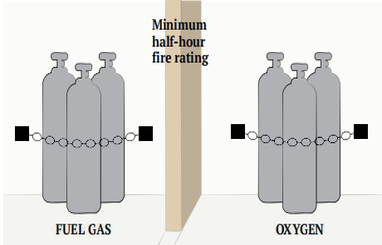 Fig 9.5 For long term storage, segregate cylinders, store them in covered but ventilated cages and keep them chained
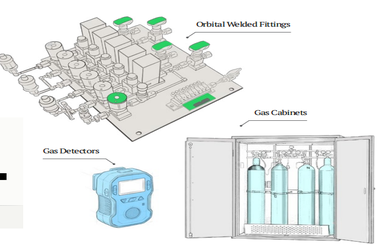 Fig 9.6 Additional requirements for hazardous gas
Cylinder Spindles
- The spindle valves of tanks come in different designs. On the left is an older design (Figure 9.7), where there is a danger of spindle loosening while the valve is being turned on. There are two threads in series. Opening one can open the other. The probability of this is significantly lower in newer spindle valves. Request all labs in charge to do a self-audit of the cylinders in their labs. If they have cylinders with old designs, please change those to more modern ones.
- The threading of the connection is also a safety feature. Reverse thread connections can be identified visually by a notch inscribed on the circumference of the connecting nut.
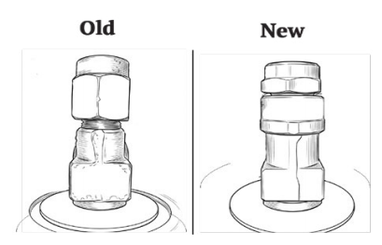 Fig 9.7 Strongly advise all to only accept
cylinders with the newer spindle design
Protocol for LPG Cylinder in Labs
- As a rule, the fuel gas loading should not exceed 1 kg per 25 m2 of floor space in well-ventilated laboratories.
- The laboratory storage of replacement (disposable) gas cylinders should be kept to a minimum and restricted to less than 1.5 kg. Any sources of ignition are eliminated near the gas cylinder when not being used.
- Use the cylinders only in well-ventilated areas.
- The fire load of other hazards present inside labs must be low.
- Labs should have secondary emergency exits.
- The minimum distance between flammable and oxygen gas should be 20 feet or 6 meters.
- Keep the cylinder valves closed when not in use
- Ensure that the cylinder is always stored upright (vertical) and is not at risk of tipping over.
- Inspect the cylinder on a regular basis to ensure it is in good condition, free from rust, and housed properly
- Ensure the cylinder is stored in an area that is adequately ventilated and not susceptible to excessive temperature rise.
- Store the cylinder in a secure location to protect against falling, damage, being hit by etc.
- Provide separate storage for LPG away from the oxidizing gases (e.g., oxygen) by at least six meters.
- Do not store the cylinder near an ignition source, or in locations that could jeopardise escape from the building in the event of a fire.
- “NO SMOKING” sign board to be placed near the cylinder storage area
- All kinds of hot works should be restricted in such labs with an LPG cylinder.
- The flammable gas cylinders should not be placed near the entrance/exit to the lab.
| Feature |
Low Risk (Inert Gases – N2, Ar, Argon) |
Moderate Risk (O2, CO2, Small Flammable) |
High Risk (H2, Silane, Arsine, Phosphine, etc.) |
|---|---|---|---|
| Examples |
Nitrogen, Argon, compressed air |
Oxygen, Carbon dioxide, and small fuel gases |
Hydrogen, Silane, Arsine, Diborane, Phosphine |
| Storage |
Keep upright, chain securely, cap on |
Same as left + keep away from heat and acids/ bases |
Store only in ventilated or areas or gas cabinets, never in an open lab |
| Transport |
Use a cylinder cart, keep it vertical, never roll |
Same as left + separate different gases during transport |
Same as left + ensure vendor follows safe transport rules |
| Installation |
2 people required, follow SOP, wear goggles |
Same as left + use regulator & shut- off valve |
Same as left + add flash arrestor, purge line, metal fittings, earthing |
|
Quantity Allowed |
Usually, there are no strict limits |
Avoid oversized cylinders |
Must not exceed 1% of lab room volume (e.g., 400 L in a 40 m³ room) |
|
Safety Devices |
Chain, cap, labels |
Same as left + regulator pressure < 8 bar |
Same as left + leak sensors with alarm, access control, and logbook |
| Emergency |
If a leak: stop work, leave the area, tell the supervisor |
Same as left + call OLSEH/security |
Same as left + pull the fire alarm, only the trained team handles |
|
Training Needed |
Basic lab safety training |
PI approval + SOP training |
Special training, OLSEH approval, and a record of all users |