
General Safety
This section describes safety practices that are fundamental in any laboratory. Following these simple, “common sense” rules will save you from most laboratory hazards. These rules apply to all labs, even offices with just computers.
Lab-Incharges
Each lab will have a PI, typically a faculty member or permanent senior staff, responsible for establishing the protocols.
Each lab should also have a designated lab incharge, typically a senior student or staff member, responsible for enforcing safety protocols.
Definition of Specialised Labs
Specialised labs are defined as any labs having the following hazards. These labs have more hazards and deserve a higher burden of safety Equipment. Hence, the specialised labs will be audited more frequently.
| Category | Criteria |
|---|---|
| Laser | Class IV and non-visible lasers |
| Biological | Biosafety Level 3 (BSL-3) or higher |
| Electrical | Load > 100 kW or exposed voltage > 450 V |
| Radiological | Ionising radiation dosage > 20 mSv/year |
| Cryogens | More than 500 litres of liquid nitrogen, helium, or other cryogen |
| Gases | Any gas with an NFPA 704 rating of 3 or 4 |
| Compressed Gas | Cumulative volume > 80 m³ at > 200 kPa |
| Chemicals | As per OSHA 3844 classification (The table in annexure A) |
| Special Hazards | Home-built equipment involving combustion, high-temperature chemical reactions (> 500 °C), compression, or shockwaves - Labs with asphyxiation risks due to O2 displacement or lack of passive ventilation |
Safety Infrastructure
2.3.1 Provided by IISc
IISc will provide the following basic infrastructure in all labs. Any shortfall can be brought to the attention of OLSEH at safety.olseh@iisc.ac.in
| Fire Safety | Alarms, hooters, and fire extinguishers in all labs. If mandated by NBC, sprinklers and hydrants also. |
| Emergency Plan | Documented emergency response plan with an Emergency Response Team run by the Security Office (ERT). |
| Signage | Exit signs, fire exit doors, and assembly points. |
| Hazardous Waste Collection | Hazardous waste collection service for segregated waste at regular intervals. Limited centralised storage capacity for waste chemicals. |
| Eyewash and Safety Shower | For hazardous chemicals: safety shower and eyewash station (ANSI Z358.1 standard; within 10 seconds or 55 feet from work area). |
| Transport Infrastructure | Ramp and/or service elevator for heavy goods, chemicals, or cryogenic liquids (on request per building). |
| Regulatory Compliance | Compliance with KSPCB, AERB, and other applicable regulatory requirements. |
| EHS Officers | Qualified EHS officers with domain knowledge. They conduct audits, send reports, and provide training. |
| Radioactive Safety | AERB-approved Radiation Safety Officer (RSO). Provision of TLD badges. |
2.3.2 Maintained by PI or Department
Principal Investigators (PIs) or departments must maintain the following infrastructure, using project or departmental funds:
| Orientation and SOPs | Documented safety orientation for new users; SOP for each hazardous equipment. |
| Lab Identification | Hazard sheet posted outside each lab. |
| Lifts and Transport | Working service lift (mandatory if: building > 4 floors; or building ≥ 2 floors with compressed gas cylinders or hazardous chemicals). |
| Personal Protective Equipment (PPE) |
PPE for all hazards in the lab as per regulations.
See Chapter 3. |
| First Aid | First aid box (as per standard). Calcium gluconate if hydrofluoric acid is present. |
| Access Control | Controlled lab access (biometric or physical lock & key). |
| Emergency Power | Emergency light with battery backup or central UPS. |
| Electrical Safety | Circuit breakers with suitable ratings. Power disconnection must be allowed without entering the lab. |
| Chemical Storage | Hazardous chemicals must be segregated and stored in fire-rated chemical cabinets (≥ 30 minutes) or in a segregated area outside the main building. |
| Gas Storage and Alarms | Hazardous gases (NFPA > 2) must be stored in gas cabinets. Labs with hazardous gases must have interlinked gas alarms. |
| SCBA | Departments handling hazardous gases (NFPA > 2) must have at least one Self-Contained Breathing Apparatus (SCBA). |
| BSL-3 Labs | Hazard suits are stored outside the labs for rapid access by first responders during emergencies. |
Safety Test
Safety policy requires that all lab users be trained in safety. Knowledge about general safety is mandatory for all, irrespective of the kind of work.
Special hazards like chemicals, compressed gas, lasers, bio-hazards, high-voltage, or radioactive materials need special training. OLSEH conducts an online test. Users are required to pass these tests.
2.4.1 Eligibility and Requirement
- The General Safety Test is mandatory for:
- Students (UG, Masters, PhD)
- Interns (short-term or long-term)
- Technical staff (permanent or contract, if they use the lab)
- Project staff (if they require lab access or work inside the lab)
- Specialised chemical, biological, electrical, laser,
radiation, and gas & cryo safety tests are mandatory for labs that house the respective hazards.
For example, if you work in a lab with radioactive
and biological hazards, you must take the bio and
radiation safety test, even if you are not directly using the hazards.
- The Dean has made the Biological Safety test mandatory for everyone in the Bio Division.
- Exemptions: Faculty/PI, housekeeping staff, security personnel, administrative staff, and personal assistants/secretaries are not required to take the test.
2.4.2 Validity
The scorecard is valid for one year from the date of passing the exam. Users must pass the test again thereafter.
 Fig 2.1 General safety test is mandatory for all lab users
2.4.3 Passing Marks
21 out of 25 in each module
2.4.4 Verification
- A mail proof or a screenshot of the scorecard is sufficient for verification.
- Automated emails with scorecards are sent only
from the following addresses:
- Aasindia-test-submit-2-donotreply@aon.com
- safety.olseh@iisc.ac.in
2.4.5 Access Control
Users without a valid pass certificate must not be allowed inside laboratories. The PI (or lab in-charge) is responsible for preventing unauthorised access.
2.4.6 Test Access
The Online Safety Test can be accessed at https://olseh.iisc.ac.in/assessment/module.php All newly joined students and staff should complete the test before being granted lab access. OLSEH monitors participation through internal data. Departments may contact OLSEH for assistance in case of technical or procedural difficulties.
Lab Audits
The IISc Safety Policy mandates regular laboratory audits to ensure a safe working environment and compliance with institutional, national, and international safety standards.
2.5.1 Internal Audits
- Each PI or lab-in-charge is encouraged to conduct at least one audit annually, using the safety checklist provided in the Appendix.
- Department Safety Champions should verify internal audits.
2.5.2 OLSEH Audits
- OLSEH EHS Officers will conduct periodic audits, typically every 6 months.
- Specialised or high-risk labs (chemicals, biologicals, radiation, or high-voltage hazards) are audited more frequently, typically every 3 months.
- The Safety Committee may change the schedule.
- Unscheduled spot audits may be conducted.
- OLSEH audits are not announced in advance.
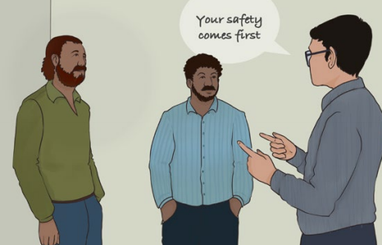 Fig 2.2 Safety officer interacting with lab users
- Audit Process
- EHS Officers (internal auditors) inspect the lab against the audit checklist.
- Findings are documented and shared with the PI, Department Safety Champion, and Department Office.
- The PI must implement corrective measures within the timeline specified in the report.
- OLSEH may revisit to confirm compliance.
- Consequences of Non-Compliance
- The OLSEH audit report is considered a “White” notice. Safety in-charges are expected to fix the issues promptly.
- Repeated violations or failure to act on the audit report will attract the more severe “Yellow” notice. Yellow notices are escalated to the Department Chair. Yellow notices have a time limit of seven days.
- Further violations or failure to act on the Yellow notice will invite a “Red” notice. Red notice is a formal order for the Department to shut down the lab. Users must not be allowed to work until the Red notice is lifted.
- In cases of severe negligence or imminent danger, OLSEH can directly issue Yellow or Red notices.
General Laboratory Practices
- Safety orientation must be provided to all new lab users. The orientation program must be documented.
- Please read the labels, material safety data sheets (MSDS), and user manuals before using unfamiliar materials or equipment. If in doubt, consult the safety in charge or OLSEH.
- All known and anticipated hazards must be considered for planning experiments.
- Users must be trained for any hazardous equipment or process.
- Retraining of existing users is mandatory, especially if new hazards are introduced into a lab, e.g., new substances, processes, or equipment.
- All hazardous equipment or processes must have a documented “Standard Operating Procedure” or SOP. Consult the Safety In-charges before deviating from SOP.
- Only proper equipment, in good condition, should be used.
- Don’t do “jugaad”. For example, anything that is not a ladder should not be used as a ladder, including boxes, chairs, cartons, shelves, chairs with wheels, etc.
- Emergency equipment (e.g., fire extinguishers, emergency eyewash/shower units, etc.) should be unobstructed, clearly visible, and in working condition.
- Spills must be attended to immediately and safely.
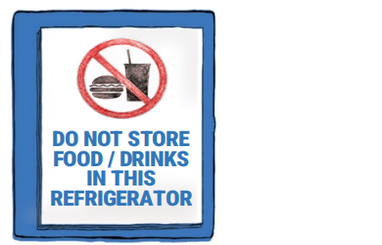 Fig 2.3 Notice must be posted on the refrigerator at eye level
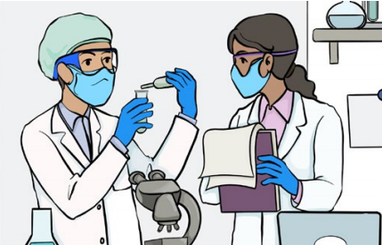 Fig 2.4 Always maintain a buddy system in the lab
- Eating, drinking, or applying cosmetics near hazards is not permitted. No food/drink should be allowed inside the lab.
- Food and drinks must not be stored with hazardous materials. Refrigerators storing dangerous materials should have a label saying, “No food or drinks”.
- All laboratories must display the Laboratory Hazard Sheet (see Appendix) on the front door. To ensure the sheet is current, the laboratory in charge must sign and date it. The sheet should be posted at eye level on or near the door. The Hazard Sheet must be prepared according to the laboratory’s safety plan. It must be reviewed and updated every six months. The sheet must be updated immediately if there are any changes in the laboratory setup, processes, or hazards in the interim.
- All labs should maintain a working landline near the door.
- All labs must maintain a list of emergency contact numbers near the phone and one near the exit door at eye level. The emergency list should include cell phone numbers of the faculty, the lab in-charge, and other regular lab users. The emergency list should also include the number of IISc health centres, campus security, local police, and fire stations.
- Follow a “Buddy system”. Never work alone in a lab, especially at night and on weekends. A “Buddy” is a fellow lab user who will be able to notice if you are in any distress. Friends on cell phones, in offices, or in hostels don’t count.
2.6.1 Personal Care
- Remove PPE before you leave the laboratory to prevent contamination.
- You can retain the gloves and eyewear while transporting hazardous materials. However, don’t use general-use elevators. Dirty gloves can contaminate buttons and other high-touch surfaces. Only service elevators or stairs can be used to transport hazardous materials.
- Maintain personal cleanliness so that hazards don’t affect you outside the lab. Always wash your hands, forearms, and face with soap and water after work, even if you wore PPE.
- Confine long hair and loose clothing to keep them from catching fire, dipping into chemicals, or snagging in machinery.
- Avoid wearing jewellery, which can reflect laser light or become entangled in equipment.
- Avoid wristbands, rakhi, rings, wristwatches, and loose ornaments. These may contaminate, react with chemicals, or snag in moving parts.
- Keep fingernails short and avoid using nail polish, as chemicals may adhere to or react with them.
- Avoid contact lenses near chemicals, biologicals, or fume hazards.
- Do not apply cosmetics, lotions, or contact lenses inside the laboratory, as they may increase the risk of chemical absorption or injury.
- Do not eat, drink, chew gum, or smoke in the laboratory to prevent accidental ingestion of hazardous substances.
- Store personal items (bags, water bottles, mobile phones, etc.) outside the laboratory.
- In case of contamination on clothing or skin, remove the contaminated clothing immediately and follow emergency washing procedures.
- Use lab-designated footwear that fully covers the feet; avoid sandals, slippers, or open-toed shoes.
2.6.2 Good Housekeeping
- Work areas must be uncluttered. Please clean them at the end of each workday, especially for hazardous materials and equipment.
- Floors must be free from tripping, slipping, and falling hazards (e.g. cords, cables, wires, equipment, and tools).
- Hallways and stairways are not storage areas. Corridors must be compliant with building codes.
- Workbenches and shelves cannot be overloaded with equipment, chemicals, etc.
- Labs need at least 2 feet of unobstructed space towards the emergency exits.
 Fig 2.5 Keep passageways free of obstructions
- The housekeeping staff cannot handle any chemical-related spillage or hazardous materials.
- The housekeeping staff are clearly instructed before cleaning the lab in any needed cases.
Guidelines for Safe Handling of Glassware and Tubing Connections
2.7.1 Hand Protection During Glassware Handling
- When working with weak or cracked glass joints on a Schlenk line, thick cut-resistant gloves are advised to avoid cut injuries. This is in addition to the standard PPE necessary as per the chemical classification of the Schlenk line.
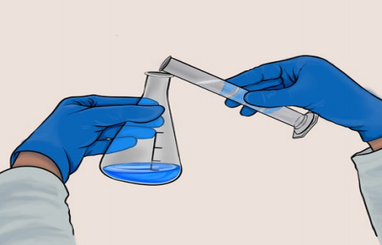 Fig 2.6 Safe handling of glassware
2.7.2 Safe Tubing Connection and Softening Practices
- Excessive pushing, pulling, or twisting force on narrow glass necks, hose connections, or glass adapters must be avoided.
- Rigid or semi-rigid tubing should be softened or eased before insertion or removal to reduce mechanical stress on glass components.
-
Softening and easing may be carried out by:
- Gentle heating using a hot-air gun or heat blower.
- Use a hot-air gun only; open flames are strictly prohibited.
- Maintain a distance of 10–15 cm, keeping the heat source continuously moving.
- Heat only the junction area, not the entire tubing length.
- Stop heating as soon as the tubing becomes slightly flexible.
- Insert or remove immediately and allow to cool naturally.
- Avoid overheating and never heat near flammable gases or solvents.
-
Other methods are:
- Dipping the tubing end in hot water, where compatible with the tubing material.
- Use of a suitable compatible solvent (e.g., DCM), only when chemically safe and risk-assessed.
- Light lubrication of the joint using a small amount of suitable lubricant (e.g., silicone grease) applied to the tubing end or glass joint. Excess lubricant must be avoided, particularly in vacuum, gas, or analytical systems.
- These measures significantly reduce the force required and minimise the risk of glass breakage and personal injury.
2.7.3 Inspection Before Operation
- All glassware, especially customised or vacuum glass components, must be visually inspected before use.
- Glassware showing cracks, chips, scratches, or stress marks must not be used and should be removed from service.
First Aid Kit
- OLSEH guidelines for first aid kits are based on OSHA's standards.
- First aid kits must be easily accessible. The kit handle should be no more than 48 inches from the ground.
- The kit must be legibly marked as ‘First-Aid Kit’, in letters not less than 20 mm in height.
-
Minimum contents are:
- Bandages and Wound Care
- Assorted band-aids - Gauze pads (assorted sizes, at least 4×4 in) - Gauze roll (at least 2 inches wide) - Medical tape (for securing bandages)
- Wound Cleaning and Disinfecting
- Antiseptic wipes - Any safe disinfectant
- Blister and Burn Care
- Burn cream
- General Medical
- Medical gloves (latex or nitrile) - First aid manual - Scissors - Tweezers - Thermometer (oral or digital) - ORS (oral rehydration solution) - Mild soap
- Eye wash solution - Eye drops
 Fig 2.7 First aid needs to be easily accessible
-
The first-aid kits must be designed per the lab’s
hazard profile. Mandatory extra items for the lab
with specific hazards are:
- Chemical Labs may need ointment with neutralising agents, e.g., calcium gluconate for HF.
- Biological Lab may need antiseptic lotions/creams.
- Consider designating a person responsible for maintaining the first aid kit.
- Regularly inspect the first aid kit and remove expired items.
- Restock the kit as needed.
- Lab users must be trained in basic first aid. OLSEH conducts monthly trainings.
- In case of a serious injury (secondary, direct, indirect, and chronic injury) or illness, always call the IISc Health Centre or seek immediate medical attention.