
CHAPTER 4
Chemical Safety
A wide variety of hazardous chemicals are used in IISc. Be vigilant!
4.1 Chemical Safety Basics
4.1 Basics
- The lab-in-charge must train all new users in chemical safety. We recommend yearly refreshers.
- Become familiar with the location of fire extinguishers, spill kits, and first-aid boxes in your area. Familiarise yourself with their use. All laboratories with large amounts of chemicals must have access to a spill kit.
- Before using a material, a user must find a safe way to store, handle, and dispose of the hazardous chemical.
- Material Safety Data Sheets (MSDS) must be reviewed for product-specific handling, storage, and disposal of information for all chemicals stored in a lab.
- All researchers are responsible for educating themselves about the hazards of chemicals in their vicinity. The best way to do this is to read MSDS.
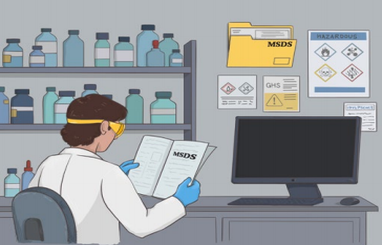 Fig 4.1 Lab user referring to a chemical's MSDS
- All labs are expected to maintain a folder of MSDSs for all chemicals in the lab. The folder must be stored in a visible location near the door. Online repositories are ok, provided they are searchable on demand.
- Before finishing, ensure that the work areas are clean and that waste chemicals are properly disposed of. Any unattended chemical must be clearly labeled. There should also be a note with the user's name, phone number, and expected return time.
- Maintain the manufacturer's label on chemical bottles. If the contents are moved to a secondary container, attach the IISc chemical label (see Appendix or download from the OLSEH website).
- Chemicals must be used inside fume hoods. Do not open chemical bottles outside of fume hoods. Details are below.
- Chemical waste should be segregated and labelled using the IISc Waste Label. See the Appendix or download from the OLSEH website.
- Limit the amount of chemicals in the lab. Buy a moderate amount of chemicals that can be consumed soon. Don't let chemical waste pile up.
- Don't mix incompatible chemicals. Specifically, compositions, like organic solvents and acids, are explosive.
- Never add water to acid. Always add acid to water.
- If inorganic fluorides are in the lab, a 2.5% calcium gluconate ointment should be in the first-aid box to treat burns.
- Contact the trauma centre immediately if you think you have been exposed.
- Proper Handling of Glassware: All reaction vessels must be securely clamped or supported properly; unstable placement on the bench/hood floor is strictly prohibited to prevent spills or splashes. Use always appropriately sized support for reaction flasks. Teflon rings are suitable for up to 100 mL RB; larger flasks (≥250 mL) should be secured with proper clamps or properly sized rings to prevent tipping and spills. Tissue paper may be placed inside the ring to provide additional stability for round-bottom flasks.
4.2 Personal Protective
Equipment (PPE)
Personal Protective Equipment (PPE)
Please refer to the PPE guideline in Chapter 3 for detailed instructions.
4.3 Fume Hoods & Exhaust
Fume Hoods & Exhaust
- Chemicals produce hazardous fumes. The best way to handle this hazard is to evacuate the fumes using a fume hood connected to an exhaust. Here, “fume hood” refers to all exhausted enclosures, like chemical fume hoods, local exhaust ventilation (LEV), canopies, chemical glove boxes, ventilated storage cabinets, exhausted dustbins, etc.
- These guidelines do NOT apply to gas cabinets. Refer to Gas Safety for gas cabinets.
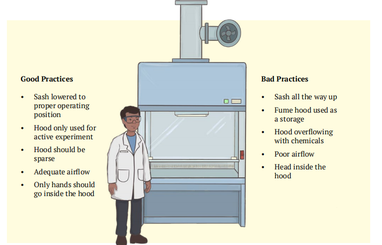 Fig 4.2 Good vs. bad fume hood practices
4.3. Fume Hoods & Exhaust
4.3.1 Fume Hoods
- Fume hoods are engineering controls that reduce exposure to hazardous vapours. They consist of a semi-enclosed area connected to an exhaust to maintain a minimum air flow. This dynamic barrier drastically reduces the fumes the user is exposed to.
- Fume hoods are primarily used for handling odorous or hazardous materials with minimal exposure. A secondary objective is to protect the user from spills by partially enclosing the work area.
- The hood is connected to an exhaust blower with ducts and dampers. Dampers and blowers need to be serviced at least once a year.
- Any experiments generating air contaminants at or above the permissible exposure limit (refer to MSDS) should be conducted inside the fume hood.
4.3 Fume Hoods & Exhaust
4.3.2 Flow in a Fume Hood
- The flow of a fluid is measured in terms of linear flow velocity, usually denoted in feet/min or meters/hour. To calculate the exhaust capacity, you must multiply the flow of velocity by the hood area (in m2 or ft2) to calculate the cubic flow rate, usually denoted in cubic-feet/min (CFM) or cubic-meter/hour (CMH).
- The hoods require a minimum face velocity of 30 m/min (i.e., 100 linear feet per minute) at normal working conditions. Hoods for highly toxic materials (NFPA>2 in health or explosive category) require higher face velocities (up to 45 m/min or 150 linear feet/min). Fume hoods should never operate beyond 150 ft/min to prevent turbulence that could expose the user to fumes.
- Hoods have a sash that can be moved to change the air flow. The “normal working height” of 100 LFM must be clearly marked. The minimum (minus 50 LFM) and maximum (plus 50 LFM) positions must also be marked. Mechanical stops should be installed to prevent the sash from exceeding the minimum and maximum positions.
- The fume hood is unusable if the flow is less than 75 LFM. Unusable hoods must be marked with a “DANGER HOOD IS NOT WORKING! DO NOT USE!” tag.
- The face velocity of hoods must be measured using an anemometer.
- Ideally, the anemometer must be permanently installed in hoods. Users are expected to check the flow before starting work in a hood.
- If an anemometer is not installed, the lab safety-in-charge must measure the flow in the hood monthly using a portable anemometer. These readings must be recorded in a log accessible to all users and OLSEH officers.
- EHS Officer or an authorized third party must assess the operation of hoods once a year.
4.3 Fume Hoods & Exhaust
4.3.3 Operations
- Assess the hazards before beginning work on a new material.
- Use hoods with an adequate face velocity.
- The user should always remain outside the hood. Never put your head inside a hood to check on an experiment.
- Place the hood sash at the working height. Never work with the sash in a fully open position. Place the sash at the lowest position to conserve power when not used.
- On hoods where sashes open horizontally, position one of the doors to act as a shield in the event of an accident in the hood.
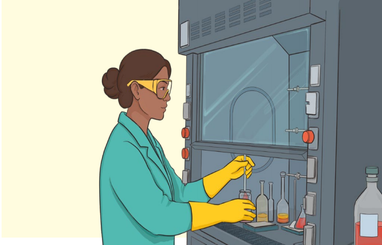 Fig 4.3 Lab user working in fume hood
- Avoid storing chemicals in the fume hood’s working area. This not only clutters the workplace but also disturbs the flow.
- Label all your samples appropriately before storing them in the fume hood; it will be important for all the fume hood users to be aware of the contents inside the hood.
- Keep your work at least 6 inches from the hood sash’s plane of movement.
- Clear at least 50% of the work area, so the flow is not disturbed.
- Any equipment that needs to remain in hoods should be elevated on racks or feet to allow airflow underneath.
- Do not block the baffles at the back of the hood. These allow for the proper exhausting of contaminants from the hood.
- Fume hoods shall not be near busy walkways or air diffusers.
- Minimize foot traffic in front of the hood.
- If a reaction becomes uncontrollable, turn off the heat, stop adding reagents, alert any nearby lab personnel, and keep the chemical fume hood fully closed until the temperature goes down.
- A fume hood is only the first line of defense against accidents. The hood users should wear safety goggles, lab coats, and appropriate chemical gloves while working around the fume hood.
- Empty bottles can be dried in the hoods. However, do not use the hood exhaust to evaporate large amounts of volatile materials. Use normal chemical waste disposal channels only.
4.3 Fume Hoods & Exhaust
4.3.4 Construction
- OLSEH recommends commercial hoods. Home-built hoods are deprecated.
- Hoods must be made of a material appropriate for the hazard. Wood and particle board are not allowed.
- The hoods must have corrosion-proof fittings.
- Hoods must have an inbuilt light.
- The hood sash should have shatterproof or reinforced see-through glass/plexiglass.
- Chemical cupboards should be so designed that there is a strong upward draught even when the shutter is open, and there is no chance of fumes entering the laboratory. For extremely poisonous vapours, it is advisable to have an air inlet at the bottom for continuous air flow and evacuation.
- The hood shouldn’t be too deep to allow easy access to the fittings inside, and controls for the service connections should be placed outside.
- The exterior/ interior walls, work surfaces, and duct material of a fume hood must be chosen based on the intended usage of the hood, e.g., PVC/FRP ducting is often used for corrosives.
- The exhaust blower should be compatible with the fumes created in the hood. It must be sized appropriately (see the section on flow 4.3.2).
- Ductless fume hoods that recirculate the exhaust back into the laboratory do not replace fume hoods, as they do not provide sufficient protection from hazardous vapours. Ductless hoods are deprecated, even if they have active filters designed for specific chemicals.
- Similarly, elephant trunk systems or canopy hoods are not substitutes for fume hoods, as they only provide partial capture and do not ensure full protection. If used, they must be placed within a few inches (typically 6–12 inches) of the source and are suitable only for nuisance vapors, moderate heat, or over columns/fractions—not for toxic or highly volatile chemicals.
4.4 Transport, Storage,
and Use of Chemicals
Transport, Storage, and Use of Chemicals
- Don’t carry chemical bottles in your hands. Transport chemicals in bottle carriers, carts, buckets, etc.
- Store the four classes of chemicals separately, i.e., acids, bases, solvents, and oxidizers. If there is an issue of space, solvents and bases can be stored together, and acids and peroxides can be stored together. However, chemicals that can react violently or emit hazardous fumes when mixed should not be stored near each other. For example, oxidizers and flammables must never be stored together.
- Some chemicals have expiry dates. Chemicals stored beyond their shelf life are dangerous. For example, ether, tetrahydrofuran, & dioxane form explosive peroxides, which can detonate while opening the bottle. All such chemicals must be labeled with the expiration date before being stored.
- Flammable materials should be stored in chemical cabinets with a 30-minute fire rating and exhaust. Small quantities (< 100 ml) can be left on benches, but only during use.
- Corrosive materials should be stored in plastic or epoxy-coated steel cabinets. The cabinets must be connected to an exhaust. Corrosive chemicals can also be stored in a drawer under the fume hoods. If metal cabinets are used, the secondary containment must be plastic. Metal cabinets must be replaced if there are signs of corrosion.
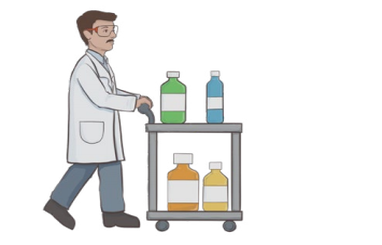 Fig 4.4A Transporting chemicals safely using a cart, not by hand
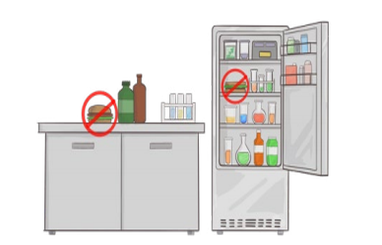 Fig 4.4B No food or drink on benches or in refrigerators used for chemical storage
- All cabinets must be labeled by chemical class (e.g., flammable liquids, acids, oxidizers) to ensure chemicals are suitably segregated.
- Acids, bases, and oxidizers must be stored inside cabinets with secondary containment (to contain the spill in case the first container ruptures). Corrosion-resistant plastic trays are a low-cost option for secondary containment.
- Large bottles and bottles containing toxic, flammable, or corrosive liquids should be stored on shelves below eye level (maximum 5 feet). Corrosive materials can cause severe tissue damage and are particularly injurious to the eye.
- Volatile or unstable materials may be stored in a flammable-rated refrigerator only in properly sealed containers. Never store flammable solvents (ether, benzene) in the fridge in open containers (beakers).
- Food or drink should never be stored in a laboratory refrigerator or freezer. A “no food/drink” notice is required on all laboratory refrigerators.
- Corrosive chemicals must not be stored in incompatible containers. For example, hydrofluoric acid is incompatible with glass. Inorganic hydroxides are best stored in polyethylene containers.
- Never leave an unlabeled bottle of something after finishing work. Everything should be labeled with the Chemical label (See Appendix or OLSEH website).
- All high-hazard materials must be used in the fume hoods only. Hazard categories are defined in the PPE section.
- Glass syringes with metal Luer lock tips (1–50 mL) with longer needles are a safer alternative to disposable plastic syringes, particularly for hazardous chemicals.
4.4 Transport, Storage, and Use of Chemicals
4.4.1 Volatile Solvents
- Highly volatile solvents, like Acetone and alcohols, are often flammable with a low flash point. They ignite even at low temperatures.
- Flammable solvents must only be transported in chemical buckets. A spill of a gallon bottle of Acetone could cause a catastrophic fire or explosion.
- Highly volatile solvents should only be used inside fume hoods.
- Never use volatile solvents near a hot plate. The hot plates can ignite spilled solvent. The resulting fire could easily be drawn into the exhaust ducts with catastrophic consequences.
- Solvents can react explosively with oxidizing agents, e.g., peroxides and nitric acid. Never mix them.
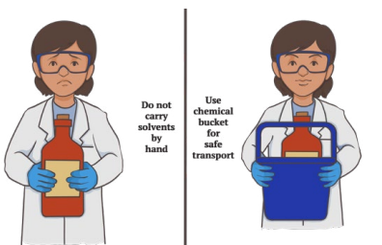 Fig 4.5 Chemical bottle transport
- Spilled solvents should be contained immediately with chemical spill kits. Seek help as required.
4.4 Transport, Storage, and Use of Chemicals
4.4.2 Chlorinated Solvents
- Chlorinated solvents are particularly hazardous, causing cancer and organ damage. Examples are chlorobenzene, trichloroethylene, and methylene chloride.
- As with most solvents, they can be readily absorbed through the skin.
- Chlorinated solvent waste should be segregated as a distinct category. Do not dispose of them as non-halogenated “solvents”.
4.4 Transport, Storage, and Use of Chemicals
4.4.3 Peroxides
- Peroxides are oxidizers. Be careful when mixing peroxides with other materials. Peroxides are incompatible with organic solvents.
- Peroxides can also be unstable and explode.
- The class of organic peroxides is even more dangerous. Please read the MSDS before use.
- Some solvents, like ethers, Tetrahydrofuran (THF), and dioxane, form peroxide when exposed to oxygen and light. Before use, check for peroxides by using KI or peroxide test strips. Dispose of solvents with peroxides. Don't attempt to purify them.
4.4 Transport, Storage, and Use of Chemicals
4.4.4 Handling Large Quantities
- These guidelines apply anytime you work with more than 10 liters of chemicals. The situation occurs frequently during waste or bulk solvent collection.
- Do not lift heavy drums. Do not lift heavy containers. Use a siphoning pump or a drum tap. If impractical, place the receiving container at a lower level and pour liquid from the source drum down.
- Proper Ventilation: Always perform solvent transfers in a well-ventilated area, preferably within a fume hood or using local exhaust ventilation.
- Secondary Containment: Place the receiving container within a chemical-resistant spill tray.
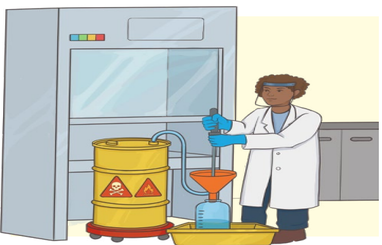 Fig 4.6 Transferring solvent safely
- Size the Funnel: Do not use small funnels when transferring liquids from heavy drums. Hold the funnel slightly above the container to prevent pressure buildup.
- Wear PPE: Please refer to the PPE section for the appropriate PPE for handling large amounts of liquids.
4.4 Transport, Storage, and Use of Chemicals
4.4.5 Distillation
- Distillation is a common laboratory procedure that presents a fire and explosion hazard.
- All distillation setups should be inside a fume hood.
- Minimize the amount of chemicals in a batch.
- Ensure all wiring is intact to avoid electrical shock and sparks. Wires should not hang outside the fume hood.
- Violent boiling, or “Bumping”, can cause solvent splashing or rapid vaporization. Use boiling chips or a magnetic stirrer to prevent bumping.
- Ensure glassware is oven-dried and inspect for any defects, such as star cracks.
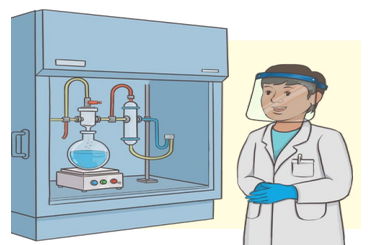 Fig 4.7 Solvent distillation setup
- Fill the round-bottom flask with no more than two-thirds of the solvent.
- Seal all joints with joint clips and Teflon.
- Agents like sodium metal, LAH, CaH2, and P2O5 dry solvents before distillation. Before adding these reactive agents in bulk, always test the moisture level in 1-2 ml of solvent. Ethers like THF and DME require pre-drying with activated molecular sieves.
- OLSEH recommends the use of high-quality anhydrous solvents instead of drying agents. If drying is required, identify the proper drying agent. For example, drying dichloromethane with sodium generates explosive carbenes.
- Cut metallic sodium inside the fume hood while wearing the required PPE.
- Ensure a dry-powder fire extinguisher is nearby and accessible before working with sodium.
- Use purified argon or nitrogen as inert gases.
- Clearly label the still with the solvent and drying agent (e.g., THF/Na, DCM/CaH2) on a note outside the hood.
- Some solvents, like ethers, THF, and dioxane, form peroxides when exposed to air and light. Before distillation, check for peroxides using KI or peroxide test strips. Dispose of peroxide- contaminated solvents. Never distill a peroxide- contaminated liquid.
- Standard protocols are available for hexane, THF, DME, Toluene, or DCM solvents.
- Start cold water flow through the condenser only after the apparatus is fully assembled under inert gas flow.
- The distillation setup must always be supervised. Don’t leave the lab without shutting down the setup. Do not run the still overnight on “simmer” mode.
- The distillation flask should never dry out. Use an overflow connector or monitor the setup continuously to prevent accidental drying.
- Keep the fume hood sash fully closed during operation.
- The residual solvent containing sodium or other drying agents should be carefully quenched by small amounts of propanol, followed by absolute methanol, until the sodium is destroyed.
- Allow the still and heating mantle to cool to room temperature before handling.
4.4 Transport, Storage, and Use of Chemicals
4.4.6 Inhalation Hazards
- Airborne substances, like gases, vapors, dust, fumes, or mists, pose an inhalation hazard.
- Solids that can aerosolize should only be used with masks or ventilators, e.g., dust, small particles (< 10 µm), dry nanoparticles, etc.
- Volatile, fuming, or mist-generating liquids should only be used in ventilated areas.
- Some equipment produces airborne hazards in fumes, dust, or mist. e.g., physical vapour deposition systems (sputtering, evaporation, etc.); sand-blasters; grinders, low-melting point metals; solids that sublime at low temperatures; etc. These hazards are compounded if the same equipment handles toxic materials. Care must be taken to reduce exposure to this equipment or toxic materials. Use gas masks and respirators.
- Gases are another common source of inhalation hazard. Please follow the guidelines on gas safety.
- Some gases, like H2S, occur naturally and can be tolerated in small amounts. Hence, there is a tendency to discount their severity. This is a mistake. Always refer to the MSDS. When such information is not available, err on the side of caution.
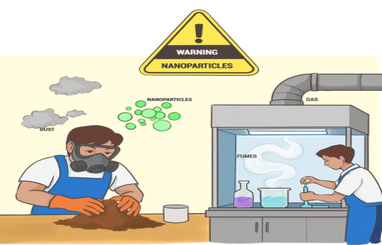
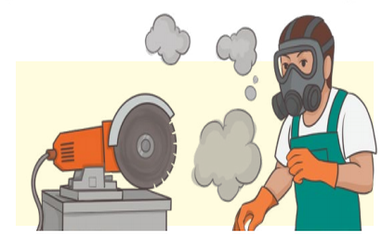 Fig 4.8 Sources of inhalation hazards
4.4 Transport, Storage, and Use of Chemicals
4.4.7 Chemical Inventory and Storage Management
- Ensure that the chemical inventory includes the
following information for all corrosive, moisture-sensitive, and reactive chemicals:
- Date of receipt
- Date of first opening
- Approximate quantity remaining
- Old or unused chemicals (older than 2–3 years) must be periodically reviewed. If any chemical shows physical changes such as discoloration, pressure buildup, or haze formation, its use should be discontinued immediately, and the material should be disposed of.
4.4 Transport, Storage, and Use of Chemicals
4.4.8 Proper Use of Chemical Fume Hood
- Users must strictly follow OLSEH fume hood usage guidelines.
- Training should emphasize avoiding work with the sash fully open under any circumstances.
- The hood sash must be operated at the recommended working height to ensure user protection
and airflow efficiency:
- For vertical sashes: Keep the sash below chin level while working.
- For horizontal sashes: At least one sash panel must fully cover the user’s body, allowing only the hands to reach inside for handling bottles or reaction setups.
- Each hood should have clear signage/label indicating the adequate sash height, as users frequently forget to adjust it correctly during operation.
4.4 Transport, Storage, and Use of Chemicals
4.4.9 Standard Operating Procedure (SOP) for Hazardous Chemical Handling
- Ensure that each lab maintains a written SOP for handling hazardous, reactive, moisture-sensitive, and corrosive chemicals, covering their storage, transfer, and disposal procedures.
- The SOP must clearly specify safe handling techniques, including Hood Operation:
- Always work inside the hood, not at the edge. The bottle or reaction setup should be placed at least 6 inches inside the hood from the front edge. Working near the edge can cause fume escape, as suction is weaker there.
- Secondary Containment: Always place the chemical bottle on a secondary containment tray (plastic or Teflon) inside the hood to catch spills or drips–never directly on the metal/hard surface.
4.4 Transport, Storage, and Use of Chemicals
4.4.10 Bottle Handling
- Hold the bottle firmly by its base, not by the neck.
- Slightly tilt the bottle away from your face within the hood enclosure, keeping it roughly at arm's length.
- Do not lift the bottle upward while tilting–keep its bottom supported on the tray or hood surface.
- Loosen the cap slowly, allowing any built-up pressure to release gradually so that escaping vapours are captured by the hood airflow. This practice helps prevent sudden fume bursts toward the user.
4.4 Transport, Storage, and Use of Chemicals
4.4.11 Stench Chemicals & Lachrymators
- Stench chemicals are not necessarily toxic, but create an overwhelmingly noxious smell even in minuscule quantities, such as butyric acid, valeric acid, selenides, telluride compounds, thiols, etc.
- Lachrymators cause severe eye, nose, and respiratory tract irritation, leading to tears ("lachryma" = tears in Latin), sometimes even in minute quantities. Examples are thionyl chloride (SOCl₂), acrolein, benzyl chloride, phosgene (COCl₂), and dimethyl sulfate.
- Researchers must inform all lab users, the lab in charge, & PI before using stench chemicals or lachrymators.
- Store the stench chemicals & lachrymators in tightly sealed containers with teflon tape.
- Rubber septa are not a good way to contain these chemicals, because they permeate through them.
- Only use the minimum necessary quantity.
- Always work inside a fume hood or glove box.
- Keep the fume hood sash as low as possible.
- Use Schlenk lines or a bleach trap for stench chemicals.
- Use Schlenk lines or a glove box for lachrymators. Double containment is mandatory.
- Transfer liquids using a syringe or cannula only. Never pour. Decontaminate and discard any pipettes or micropipettes.
- Do not use a rotary evaporator to concentrate reactions solutions. Use a vacuum with a cold trap.
- Abate the exhaust chemicals, even if fume hoods or glove boxes are exhausted. Heated vapours can re-enter through air intakes or wind.
- Stench chemicals can be abated by activated carbon or oxidizing scrubbers like bleach or KMnO₄.
- Alkaline scrubbers can be used for lachrymators.
- Waste from the abatement systems is a chemical hazard. Handle it with PPE and dispose of it as chemical waste.
- Clean used labware by rinsing and submerging it in bleach for up to 24 hours.
- Any solid waste (e.g., gloves, paper towels, septa) should be in a sealed (zip-lock) bag. Take the bag to the chemical waste shed.
- For minor spills of stench chemicals or lachrymators: wear PPE, confine spill with absorbent pads, clean surfaces with 3% H₂O₂ and NaHCO₃. Avoid bleach as it forms hydrochloric acid. For lachrymators, you will need a respirator or SCBA. Take the waste to the chemical waste shed.
4.4 Transport, Storage, and Use of Chemicals
4.4.12 Pyrophorics
- Pyrophorics ignite spontaneously in air (no heating or sparks needed). Examples are metal alkyls like trimethylaluminium, t-butyllithium, and Grignard reagents; hydrides like NaH, KH, LiAlH₄, silanes and arsine; and spent catalysts like Raney nickel & palladium on carbon.
- Researchers must inform all lab users, the lab in charge, & PI before using pyrophorics.
- The PI must sign off on a documented (hardcopy) standard operating procedure (SOP).
- OLSEH approval is mandatory. Must be informed in advance & invited to conduct a safety audit. OLSEH will check SOP.
- Always wear appropriate PPE. See the section on PPE
- Glass bottles of pyrophoric reagents should not be handled or stored unprotected. The metal can that ships with each bottle should be retained as a protective container for transportation and storage.
-
Read online about safe handling practices for pyrophorics, especially if working outside a glove box. Two resources are:
- “Methods for the Safe Storage, Handling, and Disposal of Pyrophoric Liquids and Solids in the Laboratory” Journal of Chemical Health & Safety 2011, January/February 18(1), 5–10.
- Aldrich Technical Bulletin AL-134.
- Pyrophorics must be handled inside a high-flow hood or glove box. Secondary containment, like a glove bag or Schlenk lines, is mandatory.
- Never pour pyrophorics. Use syringes with long needles to transfer small quantities. Quantities beyond 50 ml must use the cannula (double-ended needle) transfer technique. Syringes should never exceed 50% capacity. Volumes beyond 50% are hazardous because there is a risk of the plunger leaving the barrel, spilling the contents.
- Pyrophorics must be isolated using catalytic burn boxes with wet scrubbers.
- Plans for the safe destruction or proper disposal of unused/unreacted material. Discuss the plan with OLSEH during the approval process.
- All used labware should be cleaned immediately after use, flushed with the solvent, dismantled, and cleaned with appropriate solutions.
- In the event of a spill, powdered lime should be used to smother and cover the spill completely. A container of powdered lime should be kept within arm’s reach when working with pyrophoric materials.
- Pyrophoric spills may ignite. To quench, you may need a Class D fire extinguisher. Never use water or CO₂, as they might react with pyrophorics. Plan to have one in advance.
4.4 Transport, Storage, and Use of Chemicals
4.4.13 Explosives
- When exposed to shock, pressure, or high temperature, an explosive rapidly releases pressure, gas, and heat. Some chemicals can become unstable or potentially explosive over time due to contamination from air, water, or metals, or if they dry out. Examples include Picric acid & TNT.
- Researchers must inform all lab users, the lab in charge, & PI before using explosive chemicals.
- PI must sign off on a documented (hardcopy) standard operating procedure.
- OLSEH approval is mandatory. Must be informed in advance & invited to conduct a safety audit. OLSEH will check SOP.
- Conduct experiments in a fume hood or glove box with a safety shield. We need double containment.
- Remove unnecessary equipment and chemicals from the work area.
- Notify others in the lab about the experiment, hazards, and timing.
- Use non-sparking tools when handling explosive chemicals.
- Always wear appropriate PPE. See the section on PPE
- Always use high-purity solvents to minimize hazards associated with impurities.
- Date the chemical containers when received & opened. Explosives have strict expiry dates.
- Explosive chemicals must be regularly monitored. Users must maintain a logbook where the condition is tracked. Containers should not deteriorate. Compounds like picric acid must remain moist. There should be no crystalline growth inside or outside the container. There should be no discoloration.
- Explosives must never be scraped with a spatula, as the friction may initiate an explosion.
- Avoid concentrating explosives. Don’t let them crystallize. Materials that should remain “wet” must not dry.
- Avoid overcooling to prevent the dangerous buildup of unreacted reagents, which could lead to a violent reaction upon warming.
- Standard OLSEH waste disposal does not account for explosives. Discuss with OLSEH to define an SOP.
4.5 Waste Segregation &
Disposal
Waste Segregation & Disposal
- Chemical waste is prima facie hazardous and must be segregated and disposed of according to the pollution control board rules. This is a regulatory requirement with legal consequences. Any sanction will be institute-wide. A mistake from one can affect many. We also have a moral obligation to maintain the environment.
- The PI must enforce a documented procedure to segregate and dispose of all waste generated in the lab.
- In general, waste must be stored in the same container it was sold in (glass, plastic, or metal). As much as possible, avoid glass containers as they shatter easily.
- A small amount of waste can be collected in the labs. At least once a month, lab incharges must collect all the waste and bring it to the OLSEH waste collection shed or pickup point.
- . OLSEH provides free pickup for most types of segregated chemical waste
- Please fill out the disposal form shared on the intranet (campus bulletin) in advance and drop the sealed waste at the designated pickup points on the announced dates. Details are on the OLSEH website. OLSEH also sends a reminder on the Campus Bulletin.
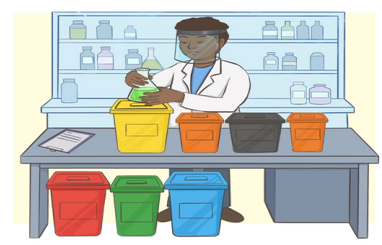
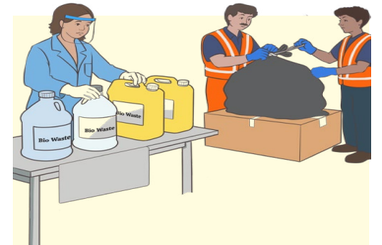 Fig 4.9 Colour-coded chemical waste bins and biowaste pickup
- Only labeled and segregated waste will be collected. Follow the segregation and labeling rules. No mystery chemicals, please.
4.5 Waste Segregation & Disposal
4.5.1 Categories of Waste
- The KSPCB and the waste vendor regulate categories. So, expect the specifics to evolve with time.
-
Solvent waste is the generic category for non-toxic liquid waste. Solvent waste must be segregated into the following.
- Halogenated (DCM, Chloroform, CCl₄, etc.)
- Non-halogenated (THF, ethyl acetate, hexane, Acetone, methanol, etc.)
- Aqueous – Acidic (pH<4)
- Aqueous – Basic (pH>10)
-
Solid waste is the generic category for non-toxic solid waste. Solid waste must be segregated into the following.
- Sharps waste (Needles, blades, broken glass, shards, etc.).
- Non-toxic “polymeric” waste (nitrile gloves, wipes, plastics, Gel ice packs, etc.).
- Non-toxic “oxide” solid waste (Ceramics, semiconducting wafers, clay, silica, empty vials/ centrifuge, etc.
-
Toxic waste is a generic category for solid or liquid waste that is a mutagenic, carcinogenic, or environmental toxin. Toxic waste must be segregated into the following.
- Toxic transition metals like Cd and Cr.
- Toxic metal complexes of Cr, Co, Cu, Ru, Os, etc.
- Compounds with heavy metals like Hg and Pb.
- Cyanides
- Empty chemical bottles from used chemicals can be separately disposed of. OLSEH picks up all types of plastic, metal, and glass bottles up to 25-liter capacity.
-
Unknown Chemicals: Unsegregated chemicals are VERY expensive to dispose of because they must be assayed first. The PI or department bears the cost of disposing of segregated chemicals. Unknown chemicals can be any of the following:
- Mixed wastes without proper composition.
- Chemicals with faded or missing labels.
- Abandoned chemicals with a label but no responsible owner, e.g., bottles from closed labs.
- Waste oil can be from any source, like pumps, diesel generators, etc. It can be used or unused.
Table No. 4.1 Hazardous waste disposal schedule
| Waste Type | Disposal Frequency |
|---|---|
| Bio-hazardous waste | Weekly |
| Liquid Waste | Monthly |
| Solid Waste | Monthly |
| Toxic Waste | Monthly |
| Waste oil | Bi yearly |
| Radioactive waste | Monthly |
| Unknown Chemicals | Every 2 Months |
| Empty Chemical Bottles | Every 2 Months |
| Old/Empty Compressed Gas Cylinders | Once every 6 Months |
| Lithium/Small Consumer Batteries | Once every 6 Months |
| Lead Acid Batteries | Once every 6 Months |
| Toxic and Flammable Gas Cylinders | On Request from PI/ Department |
4.5 Waste Segregation & Disposal
4.5.2 Segregation SOP
- Chemical waste must be segregated. When in doubt, segregate. It is a very low-effort activity that saves a lot of headaches later.
- An acid + solvent mixture can spontaneously ignite. Never store/leave a solvent + acid mixture in the lab unattended. If you do happen to make such a solution, segregate it and take it outside of the building to the waste shed.
- Acidic waste with fluoride ions must be collected separately in plastic containers, eg, dilute hydrofluoric acid, ammonium fluoride, and buffered-oxide etch.
- Environmental toxins like Cd, Cr, or Pb must be collected separately.
- Acid waste that does not contain metallic toxins or fluoride and has a pH<4 must be separately collected in plastic containers. IISc does not allow individuals to neutralize acids.
- Acid waste that does not contain metallic toxins or fluoride and has a pH>4 can be disposed of in the drain with copious amounts of water.
- Acids + oxidizers react and evolve gas. So unattended acids+oxidizer mixtures present an explosion hazard. Fresh acids+oxidizer mixtures must be collected separately and kept inside the fume hood for a day, to let the gases escape.
- Nitric acid should be treated as an acid+oxidizer.
- Base+oxidizer mixtures also evolve gases. So unattended base+oxidizer mixtures present an explosion hazard. Fresh base+oxidizer mixtures must be collected separately and kept inside the fume hood for 1 day, to let the gases escape.
- Solvents + oxidizer mixture can spontaneously ignite. Never store/leave a solvent + oxidizer mixture in the lab unattended. If you do happen to make such a solution, segregate it and take it outside of the building to the waste shed.
- Solvents must be separately collected in plastic containers, eg, benzene, ether, ethyl acetate, Acetone, alcohols, hydrocarbons, etc.
- Basic waste with a pH>10 must be separately collected in a plastic container. IISc does not allow individuals to neutralize bases. If they do not have any oxidizer, bases can be stored with solvents.
- Non-toxic basic waste with a pH<10 can be disposed of in the drain with copious amounts of water.
4.5 Waste Segregation & Disposal
4.5.3 Waste Sheds
- The State and Central Pollution Control Board regulates and audits chemical waste sheds.
- OLSEH maintains two centralized waste storage sheds near the SERC and the New Chemical Science Building. They are open to all IISc users on all workdays.
- The department can build its own storage areas, following the guidelines. OLSEH will audit these facilities.
- . The IISc chemical shed operates from Monday to Friday.
- A lab attendant registers the type of wastes received, their quantity, the department/lab, and the contact person.
- The waste must be labeled with the label and should not leak.
- The sheds don’t accept bio-wastes, empty chemical bottles, or unknown chemicals.
- Flammable, ignitable, reactive, & incompatible wastes should be stored separately.
- Adequate firefighting systems should be provided for the storage shed.
- The loading area of the waste shed should allow easy movement of waste containers.
- A truck must be able to access the loading area of the waste shed.
- The storage and handling should have an extra emergency exit.
- Proper records concerning the type of waste received, characteristics, and the location of the waste stored in the facility must be maintained.
- Only persons authorized to enter and trained in hazardous waste handling procedures should have access to the storage site.
- Loading & unloading of wastes in storage sheds should only be done by a well-trained staff under the supervision of an experienced staff member.
- Smoking shall be prohibited in and around the storage areas.
- Good housekeeping needs to be maintained around the storage areas.
- Waste should be adequately protected from direct exposure to sunlight, and adequate ventilation should be provided.
4.5 Waste Segregation & Disposal
4.5.4 Waste Containers
- Waste should be placed in compatible containers with secure screw-on tops and labeled with the “IISc Waste Label” (See Appendix).
- Drums containing waste stored in the storage area should be adequately labeled, indicating the type, quantity, characteristics, source, date of storage, etc.
4.5 Waste Segregation & Disposal
4.5.5 Spill Control
- The storage areas should be inspected daily for leaks or deterioration.
- In case of spills/leaks, use professional spill kits. Storage areas should store adequate spill kits. The waste shed should have spill kits to handle the chemicals stored inside.
- Waste shed should have secondary containment, to prevent percolation to the soil & groundwater. The storage area should be provided with a concrete or steel floor.
4.5 Waste Segregation & Disposal
4.5.6 Waste Pickup
- OLSEH collects laboratory waste through registered vendors on a monthly, Bi-monthly, and bi-yearly schedule in the following categories.
- The vendor vehicle picks up waste from designated pickup points. OLSEH announces dates in advance. Email reminders are sent to Campus Bulletin.
- Chemical waste will NOT be collected from individual labs separately. The waste must come to the pickup point on the pickup day.
- Fill out the waste disposal form in advance. Forms are on the OLSEH website.
- The waste should be labeled with chemical waste labels. Labels can be downloaded from the website.
- Waste bottles with missing details will not be picked up. OLSEH expects all fields, like the name of the departments/lab, contact person, name, mobile number, type of solvent, etc., to be mentioned clearly.
- Please ensure that the waste containers are tightly sealed.
- Leave some headspace to avoid pressure buildup during transport.
- Use 04-litre bottles or 25-litre jerry cans to store liquid waste.
- Unless chemical compatibility or safety mandates otherwise, use only plastic bottles.
- Fill all non-sharp solid waste in high-quality, thick garbage bags that don’t tear easily. The filled bag must be tied off so the waste cannot leak or spill.
- Do not place solid waste directly into cardboard boxes, as they can get damaged and leak. However, small glass bottles (toxic liquid, solid, or empty) must be packed in sturdy cartons for safe transport and not disposed of loosely.
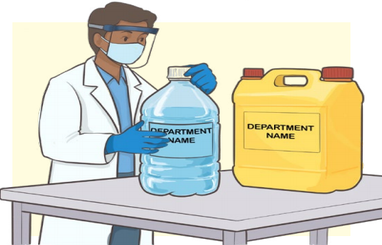 Fig 4.10 Waste Can with label
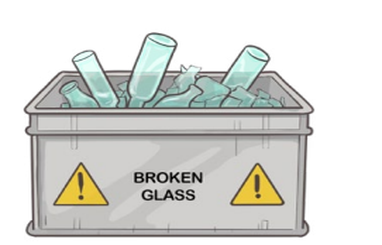 Fig 4.11 Broken glass
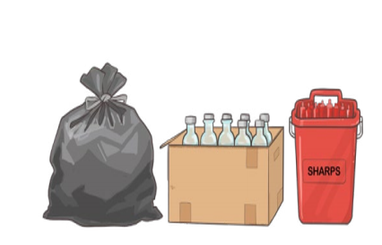 Fig 4.12 Packing solid waste
- Sharps (needles, syringes, pipettes, broken glass) must be collected in puncture-proof solid chemical waste containers.
- Don’t open or pour the contents into a new bottle for an unknown chemical. Leave it as it is.
- Error on the side of caution. If you feel that transporting a container is hazardous, don’t move it. If you are unclear about how to dispose of something, don’t guess. Contact OLSEH at safety.olseh@iisc.ac.in.
- Empty chemical containers can contain residual amounts of chemicals. All chemical containers, liquid or solid, must be rinsed three times.
- The first rinse should be collected as chemical waste and disposed appropriately; the second and third rinses can drain.
- Dry the empty container by letting it sit in a well-ventilated area. Use a fume hood (if you can access one) or find an isolated area far from the public.
- Use proper PPE during the rinsing of chemical bottles or containers.
- Deface the empty container label. The chemical name should be crossed out or blacked out before being discarded.
- Any broken glass containers must be placed in a rigid box marked as “broken glass.”
- For radioactive and bio waste guidelines, refer to the relevant chapters.
4.6 Special Hazard:
Hydrofluoric Acid
Special Hazard: Hydrofluoric Acid
- Hydrogen Fluoride (HF) is a commonly used hazardous chemical. Concentrated solutions are 40 to 70% by weight in water. HF is also used as an anhydrous gas.
- HF is used to etch glass and semiconductors, digest minerals and soils, and remove oxide coatings from stainless steel (“pickling”).
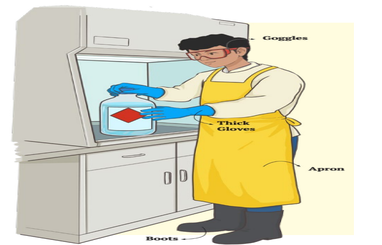 Fig 4.13 Required PPE for handling hydrofluoric acid
4.6 Special Hazard:
Hydrofluoric Acid
4.6.1 Hazards that make it Special
- HF is highly corrosive and toxic.
- Inhalation: HF fumes have a pungent, irritating, penetrating odour. HF can be smelled at 0.04 ppm (a relatively safe level). Still, one should not rely on odour for safety. The Threshold Limit Value (the concentration to which most workers can be exposed daily for a working lifetime without adverse effects) is three ppm. The threshold where HF is “immediately dangerous to life and health” is 30 ppm.
- Skin Exposure: Skin exposure can lead to severe burns, tissue destruction and death (necrosis), and systemic toxicity. Pain associated with hydrofluoric acid exposure is usually described as deep, burning, or throbbing and is disproportionate to apparent skin involvement.
- Long-term Exposure: Long-term or chronic exposure to HF may result in fluorosis, a syndrome characterised by weight loss, bone brittleness, anaemia, and general ill health.
- Eye Exposure: Exposure of the eyes to HF may result in blindness or permanent eye damage.
- Ingestion: Ingestion of hydrofluoric acid is rare and hence poorly reported. Based on evidence, ingestion will probably cause esophageal burns, systemic toxicity, and cardiac arrhythmias (similar to skin exposure).
4.6 Special Hazard:
Hydrofluoric Acid
4.6.2 Best Practices
- Wear proper PPE (see below).
- Be prepared for an emergency. Pre-planning is essential before beginning any HF work. Know the location of eyewash, safety showers, and calcium gluconate.
4.6 Special Hazard:
Hydrofluoric Acid
4.6.3 Training
- HF-specific training is mandatory for all users in a lab that stores HF.
- The training will cover hazards, controls, PPE, handling, storage, disposal, and emergency response.
- Each lab must have at least one person trained in spill control.
4.6 Special Hazard:
Hydrofluoric Acid
4.6.4 Engineering Controls
- Aqueous or gas HF must be used only inside a properly functioning fume hood.
- HF corrodes metals and glass, damaging general-purpose hoods. Special hoods made with polypropylene must be used.
- PPE is mandatory for any concentration of HF solution above 0.001%.
- Make sure the PPE is in good condition. When in doubt, replace HF PPE.
- Always use chemical splash goggles when handling HF. Safety glasses, even those with side shields, do not provide adequate eye protection.
- Thick nitrile gloves are mandatory. Six-mil-thick nitrile gloves resist around 45 minutes to concentrated HF. These gloves can be used multiple times, provided they are washed after each use. The gloves should be discarded at the first sign of deterioration.
- Users must always wear a second layer of thin nitrile gloves underneath the thick ones.
- HF-resistant aprons are mandatory. Aprons or lab coats made with natural fibers are inadequate. The aprons should be full-sleeved. Separately worn sleeves are ok. The apron must be below the knees.
- Fully closed plastic shoes are mandatory.
4.6 Special Hazard:
Hydrofluoric Acid
Tab 4.6.5
- Store HF in properly labeled, compatible polyethylene, polypropylene, or Teflon containers. Never store in a metal or glass container or a silicone-based bottle.
- Periodically check the condition of the container since plastic containers can get brittle over time.
- Store HF containers in a ventilated chemical cabinet, separate from incompatible chemicals like bases, metals, and organic compounds
- The cabinet must have secondary containment, such as a tray.
4.6 Special Hazard:
Hydrofluoric Acid
4.6.6 Emergency Response
- liSkin Exposure: Wash the exposed area with flowing water for 5 minutes. Don’t use stagnant water, like dipping your fingers in a beaker of water. Remove contaminated gloves and use a fresh pair of gloves. Apply copious amounts of calcium gluconate gel using a fresh pair of gloves. Ungloved hands should not be used to apply calcium gluconate on HF-contaminated parts. Seek medical attention while you continue the application of calcium gluconate.
- Eye Exposure: Immediately irrigate eyes at the eyewash for at least 15 minutes with a copious amount of water. Keep eyelids apart and away from eyeballs. Do not apply calcium gluconate gel to the eyes. Seek prompt medical attention.
- Inhalation: Move the exposed person to fresh air. Seek prompt medical attention.
- Ingestion (Swallowing): Do not induce vomiting. Drink large amounts of water to dilute the acid. If available, several glasses of milk or milk of magnesia. Seek prompt medical attention. Do not give any fluids to an unconscious victim.
4.6 Special Hazard:
Hydrofluoric Acid
4.6.7 Spill Clean Up
- Small spills can be cleaned by a user in proper PPE.
- Spill kits for HF clean-up are available. Only use kits specified for HF spills, typically the absorbent is soda ash, sodium bicarbonate, lime, etc.
- Don’t use spill kits that contain sand because HF reacts with silica to produce silicon tetrafluoride, a toxic gas.
4.6 Special Hazard:
Hydrofluoric Acid
4.6.8 Disposal
- Cylinders of anhydrous HF should be returned to the vendor. If you have old cylinders that you cannot return, contact the OLSEH at safety.olseh@ iisc.ac.in
- Hydrofluoric acid solutions should not be thrown down in the drain, even if the solution is neutralised. Bottle, label, and dispose of the HF through regular chemical disposal.
- Extreme care must be taken when disposing of large quantities or high concentrations.
- Chemical suppliers will also sell HF mixtures with various non-aqueous solvents such as HF-pyridine or HF-alcohol mixtures. It is not appropriate to neutralize these mixtures. Bottle, label, and dispose of the HF through regular chemical disposal.